
Digital identity trends in Europe: What you need to know

Digital identity trends in Europe are changing rapidly with the development of the Digital Identity Wallet. This article explores how these changes are influencing businesses and citizens, offering a clear vision of their potential impact.
What are the current trends in Europe?
Digital identity in Europe is evolving rapidly. Recent initiatives aim to increase security and interoperability. The EU Digital Identity Wallet is at the heart of these developments. Let's explore how these trends are transforming the European digital landscape.
Development of the Digital Identity Wallet
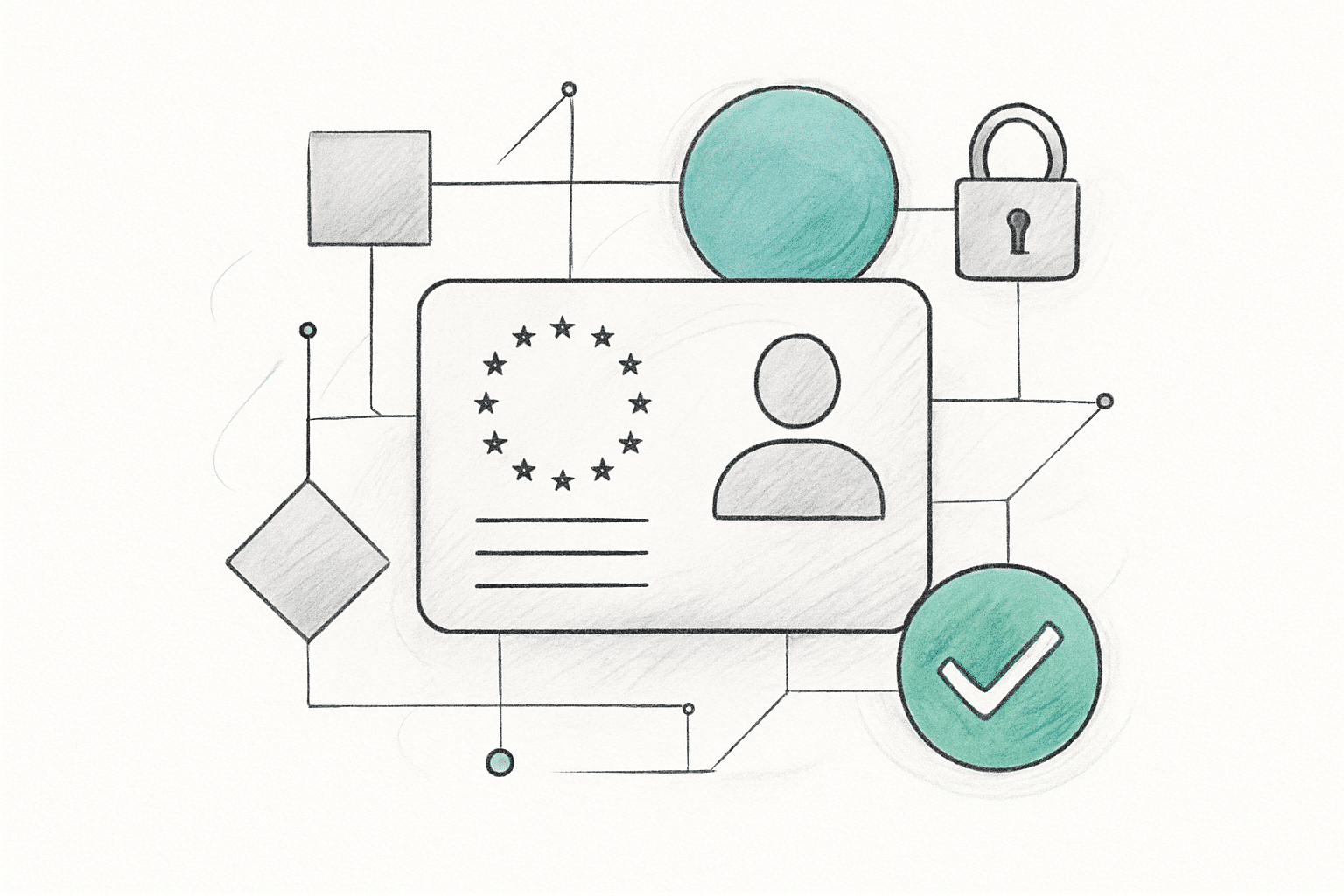
The Digital Identity Wallet in Europe is progressing. It aims to facilitate secure access to digital services. Its potential impact on citizens and businesses is immense.
Member countries are actively working on the Digital Identity Wallet to create a secure and compatible solution. Each nation adapts its approach according to its needs, but all aim to simplify digital authentication.
In other words, this wallet will allow you to keep and share official documents securely. It will also facilitate the electronic signature and the verification of certain attributes such as age or diploma. Businesses will see a decrease in fraud thanks to better authentication. This project will change the way we manage our digital identities.
Emerging technologies in digital identity
Emerging technologies are influencing digital identity. Blockchain and AI are playing a key role in this transformation.
- Artificial intelligence (AI) : It improves identity verification processes.
- Biometrics : It reinforces secure authentication.
- Cloud Computing : It facilitates data storage and access.
- Internet of Things (IoT) : It allows a smooth integration of connected devices.
How does the Identity Wallet impact businesses?
The Digital Identity Wallet is redefining how European businesses manage security, efficiency, and compliance. It is a powerful tool that transforms internal processes and ensures better data protection.
Improving security and reducing fraud
The Identity Wallet improves security by reducing fraud. Businesses benefit from more reliable authentication and a reduction in the risks associated with identity theft.
A recent study shows that the Digital Identity Wallet has reduced fraud by 30% in some businesses in Europe.
Thanks to better authentication, fraud attempts have dropped significantly.
These numbers illustrate how this technology is improving the security of digital transactions.
Increased operational efficiency
The Identity Wallet contributes to increased operational efficiency. Businesses are streamlining their internal processes, reducing costs and improving productivity.
Integrating the Identity Wallet into existing systems simplifies identity verifications.
Employees spend less time on repetitive administrative tasks, freeing up resources for higher value-added activities.
This improves the efficiency of internal operations overall.
Regulatory compliance made easy
The Identity Wallet facilitates regulatory compliance by providing a secure framework for sharing and storing sensitive data.
- Identify regulatory requirements specific to your sector
- Integrate the Identity Wallet in your data management processes.
- Former your teams on the secure use of this tool.
- Monitor regular legal updates to remain compliant.
- Evaluate the effectiveness of your compliance through regular audits.
What are the benefits for personal safety?
Digital identity offers significant benefits for personal security. It protects against identity theft and reinforces user security.
Strengthen your personal safety
Digital identity reinforces personal security by verifying the authenticity of users.
The use of digital identity allows you to effectively protect yourself against several common threats. For example, it reduces the risk of identity theft by ensuring that each user is who they say they are.
In other words, sensitive information is better secured thanks to rigorous verification protocols. This limits unauthorised access and protects your personal data. You will see, it will greatly improve your peace of mind.
Identity theft protection
Digital identity mechanisms protect against identity theft by verifying each user.
How does digital identity prevent impersonation?
It uses advanced verification methods, such as facial recognition, to confirm the identity of each user.
What are concrete examples of protection?
An example is two-factor authentication, which adds an extra layer of security when connecting to a service.
Why are these mechanisms effective?
Because they combine multiple levels of verification, making it difficult to attempt fraudulent access.
Interoperability: a key challenge for the future
Interoperability is crucial for digital identity in Europe. It allows systems to communicate effectively, ensuring a smooth user experience. Without it, technological barriers hold back adoption and innovation.
Ensuring effective interoperability
Ensuring effective interoperability between digital identity systems requires common standards. These standards facilitate communication between different systems, thus ensuring seamless integration. This reduces friction and improves the user experience.
1. Establishing common standards
To begin with, it is essential to define shared technical standards. These standards will allow systems to “speak the same language.”
2. Test compatibility
Next, you have to test the compatibility between the systems. This ensures that each component works well together.
3. Train users
Finally, training users on these new technologies is crucial. A good understanding will facilitate adoption and daily use.
Technical challenges to overcome
The technical challenges associated with interoperability are numerous. They include the management of different system architectures and the compatibility of security protocols. Overcoming these obstacles is essential for a harmonious digital ecosystem.
One of the main challenges is the diversity of existing system architectures. Each country or organization may have its own infrastructure, which complicates integration.
Moreover, ensuring the compatibility of security protocols is complex. Each system must ensure that the data exchanged remains secure and in compliance with regulations.
Practical cases of successful interoperability
Analyzing practical cases of successful interoperability offers valuable lessons. These examples show how to overcome challenges and take advantage of European digital identity.
- estonia : A pioneer in digital identity, she has integrated various public and private services.
- belgium : The Itsme system allows secure and interoperable identification.
- finland : Use of a digital identity card to access various online services.
Issues related to the protection of personal data
The protection of personal data is crucial in the context of digital identity. With the rise of the EU Digital Identity Wallet, challenges related to information security and confidentiality are intensifying. Businesses must therefore redouble their efforts to ensure the protection of their users' data.
Ensuring the confidentiality of personal data
Measures to ensure the confidentiality of personal data include advanced encryption and multi-factor authentication. These techniques ensure that only authorized individuals access sensitive information.
In Europe, data privacy policies are strict. The General Data Protection Regulation (GDPR) imposes high standards for the processing of personal information.
Businesses must obtain explicit consent before collecting and processing data. They should also allow users to control their information, thus strengthening transparency and trust.
European data protection regulations
European data protection regulations aim to regulate the use of personal information. They ensure that businesses respect the rights of users while ensuring secure and transparent management.
- General Data Protection Regulation (GDPR) : establishes rules for the processing of personal data.
- ePrivacy Directive : concerns confidentiality in the electronic communications sector.
- eIDAS Regulation : regulates electronic identification and trust services for digital transactions.
What is the future for digital identity in Europe?
The future of digital identity in Europe looks promising. The expected innovations could transform the way citizens interact with digital services. Let's explore these future perspectives and their potential impact on European society.
Future innovations in the field
Future innovations in the field of digital identity in Europe promise to revolutionize our daily lives. These technological advances aim to strengthen the security and efficiency of digital authentication systems.
- Strengthened digital identity wallet : Member States will develop advanced functionalities to improve security and interoperability.
- Biometric authentication : The increasing use of biometrics for more secure and faster identification.
- Artificial intelligence : AI to detect anomalies and prevent identity theft.
- Decentralized applications : Development of applications that allow users to control their personal data without intermediaries.
Potential impact on European society
These digital innovations could have a significant impact on European society. They aim to improve security, accessibility, and trust in digital systems.
Digital transformation could facilitate access to public and private services, thus reducing administrative barriers. By increasing security, these innovations will reduce the risks of fraud and identity theft.
In addition, increased interoperability between European systems will allow for better cross-border collaboration. This could boost the digital economy by facilitating trade and secure transactions across Europe.
In conclusion, current and future digital identity trends in Europe present both significant opportunities to improve security and efficiency, as well as challenges to be addressed, in particular in terms of interoperability and the protection of personal data. The planned innovations promise to profoundly transform the way we interact digitally.
Continue reading

Simplify identity verification
A new way to manage identity verification that's easier and more secure.