
Why European Digital Identity is essential

The European Digital Identity is revolutionizing the way we manage personal information. With the EU Digital Identity Wallet, citizens and businesses benefit from secure authentication. Discover why this innovation is crucial for our digital future.
Understanding European Digital Identity
European digital identity is an ambitious project. It aims to offer EU citizens a secure and interoperable way to manage their personal information. This system is based on the Digital Identity Wallet, an application that allows you to authenticate and share documents securely.
Definition and key objectives
The European digital identity aims to facilitate the secure authentication and management of personal data. It allows citizens to control their information while reducing the risk of fraud.
Definition European digital identity
European digital identity is a framework for EU citizens, residents and businesses to authenticate and share official documents via a secure application. This initiative aims to strengthen the digital transformation in Europe.
In other words, it offers a solution to simplify the management of digital identities while ensuring strict regulatory compliance.
The eIDAS 2.0 regulatory framework
The eIDAS 2.0 regulation supports European digital identity by setting standards for interoperability and data security across the EU.
The eIDAS 2.0 regulation establishes secure and compatible digital identities for all countries in the European Union. It seeks to standardize authentication methods while protecting personal data.
This legislative framework ensures that each state applies the same standards, which simplifies compliance with rules across Europe.
How the Digital Identity Wallet works
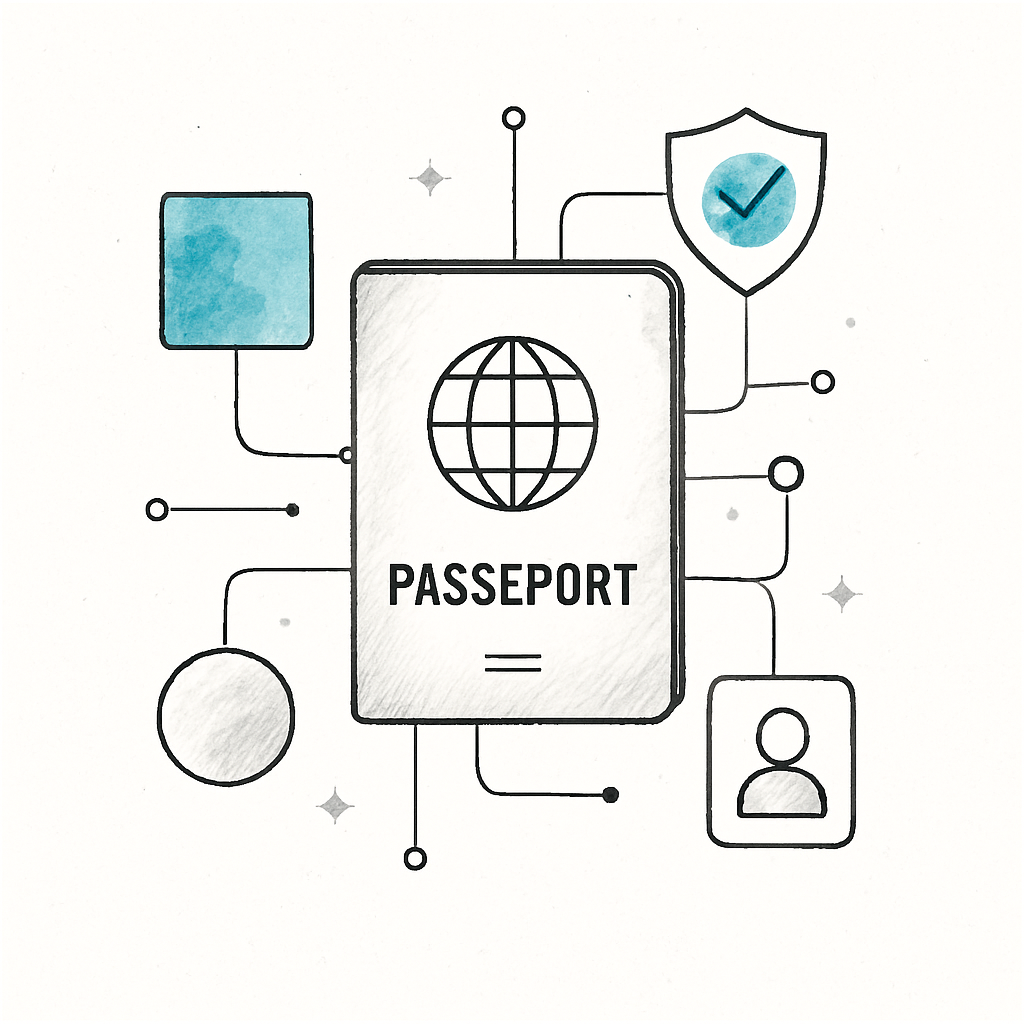
The EU Digital Identity Wallet is a secure application that allows users to manage their personal information. It makes it easy to authenticate, store, and share official documents. This innovative solution offers interoperability between the various systems of the Member States, thus guaranteeing harmonious and secure use.
Interoperability and data security
The interoperability of the wallet allows a smooth exchange of data between European systems. Security is provided by advanced protocols that protect sensitive user information.
- Interoperability : The wallet works with various national systems, facilitating the exchange of data.
- Enhanced security: Use of advanced technology to protect information.
- Secure authentication: A reliable identification process to avoid fraud.
- Personal Data Management: Users are in control of their information.
- Digital transformation: Simplifies administrative and commercial interactions.
Use of Verifiable Credentials
Verifiable Credentials play a key role in the wallet. They allow personal attributes to be proved without disclosing additional information.
What is a Verifiable Credential?
A Verifiable Credential is a digital document that proves validated information, such as a diploma or an identity card. It is secure and easy to share.
How are they used in the wallet?
In the wallet, these Verifiable Credentials help users prove their identity or other details without revealing more than necessary. This increases privacy and security.
Benefits for European businesses
European digital identity offers businesses a multitude of benefits. It simplifies customer authentication and reinforces data security. This results in reduced fraud costs and improved regulatory compliance.
Reducing document fraud
Digital identity makes it possible to considerably reduce document fraud. By using advanced technologies, businesses can verify the authenticity of documents more effectively.
- Automated verification : Automated systems analyze documents to detect anomalies. This step reduces the risk human errors.
- Multi-factor authentication : By adding multiple layers of verification, businesses increase security.
- Ongoing monitoring : The systems are constantly monitoring transactions to identify suspicious activity.
- Algorithms updated regularly : Algorithms adapt to new fraud techniques, guaranteeing constant protection.
Improving regulatory compliance
Digital identity also improves regulatory compliance. It facilitates compliance with current standards and reduces the risk of sanctions.
The adoption of digital identity ensures increased compliance with regulations such as eIDAS 2.0.
Businesses can thus avoid costly fines and strengthen their reputation on the European market.
Impact on the financial sector
Digital identity is redefining the financial sector in Europe. Banks and insurance companies are adopting these innovations to improve their processes. Why? Because it reduces fraud and increases compliance. Let's see how.
Transforming onboarding processes
Digital identity simplifies customer onboarding. Banks can verify identity quickly, reducing waiting time.
1. Step 1: Gathering Information
Customers provide their documents via a secure application. This allows data to be centralized in one place.
2. Step 2: Automatic verification
Documents are automatically checked using advanced algorithms. It decreases human error.
3. Step 3: Final validation
An agent validates the information. This step ensures that all data is correct prior to final approval.
Securing financial transactions
Financial transactions are becoming more secure thanks to digital identity. Fraud risks decrease, ensuring better data protection.
- Strong authentication via unique digital identifiers.
- Use of electronic signatures to validate transactions.
- Continuous monitoring of suspicious activities by automated systems.
- Protection of sensitive data through advanced cryptography.
Implementation challenges and opportunities
European digital identity promises major advances, but it comes with significant challenges. Let's look at the obstacles and opportunities for businesses.
Technical and legal challenges
The implementation of digital identity in Europe faces technical and legal challenges. Interoperability standards and data protection are at the heart of concerns.
What are the main technical challenges?
Technical challenges include integrating existing systems with the digital identity wallet. This requires significant technological updates, which can be expensive and complex.
What are the legal concerns?
Legal issues mainly concern compliance with regulations like the GDPR. Ensuring the protection of personal data while facilitating access is a delicate balance to achieve.
How can businesses overcome these challenges?
To overcome these challenges, businesses need to invest in robust technology solutions and collaborate with regulators to ensure compliance. This will facilitate the smooth adoption of digital identity.
Opportunities for European SMEs
European SMEs can benefit greatly from digital identity. It offers opportunities to improve efficiency and reduce costs.
SMEs can use digital identity to simplify their customer onboarding processes. This not only reduces the time required but also the risk of fraud.
By adopting these technologies, they can improve their regulatory compliance, which is crucial in an environment that is increasingly focused on data security.
The future of European digital identity
European digital identity is about to transform our daily lives. With the Digital Identity Wallet, the EU is aiming for mass adoption by 2030. This development promises to increase the security and efficiency of digital transactions.
Emerging trends and future innovations
Innovations in digital identity are numerous. Technologies like Verifiable Credentials and strong authentication are developing rapidly.
- Increased interoperability will facilitate the exchange of data between Member States.
- Adopting eIDAS 2.0 will increase trust in digital transactions.
- Advances in self-sovereign identity will give users more control over their personal data.
Role of governments and European institutions
European governments play a key role. They need to support adoption and ensure the security of digital systems.
European institutions will continue to define security and interoperability standards. Their involvement is crucial to ensure a harmonious adoption of the Digital Identity Wallet across the EU.
European digital identity represents a major advance in the security and efficiency of digital transactions. By adopting this technology, businesses can reduce fraud, improve compliance, and prepare for a digitized future. Professionals need to keep up to date with developments to maximize these opportunities.
Continue reading

Simplify identity verification
A new way to manage identity verification that's easier and more secure.