
What is Artificial Intelligence?
50 SHADES OF AI
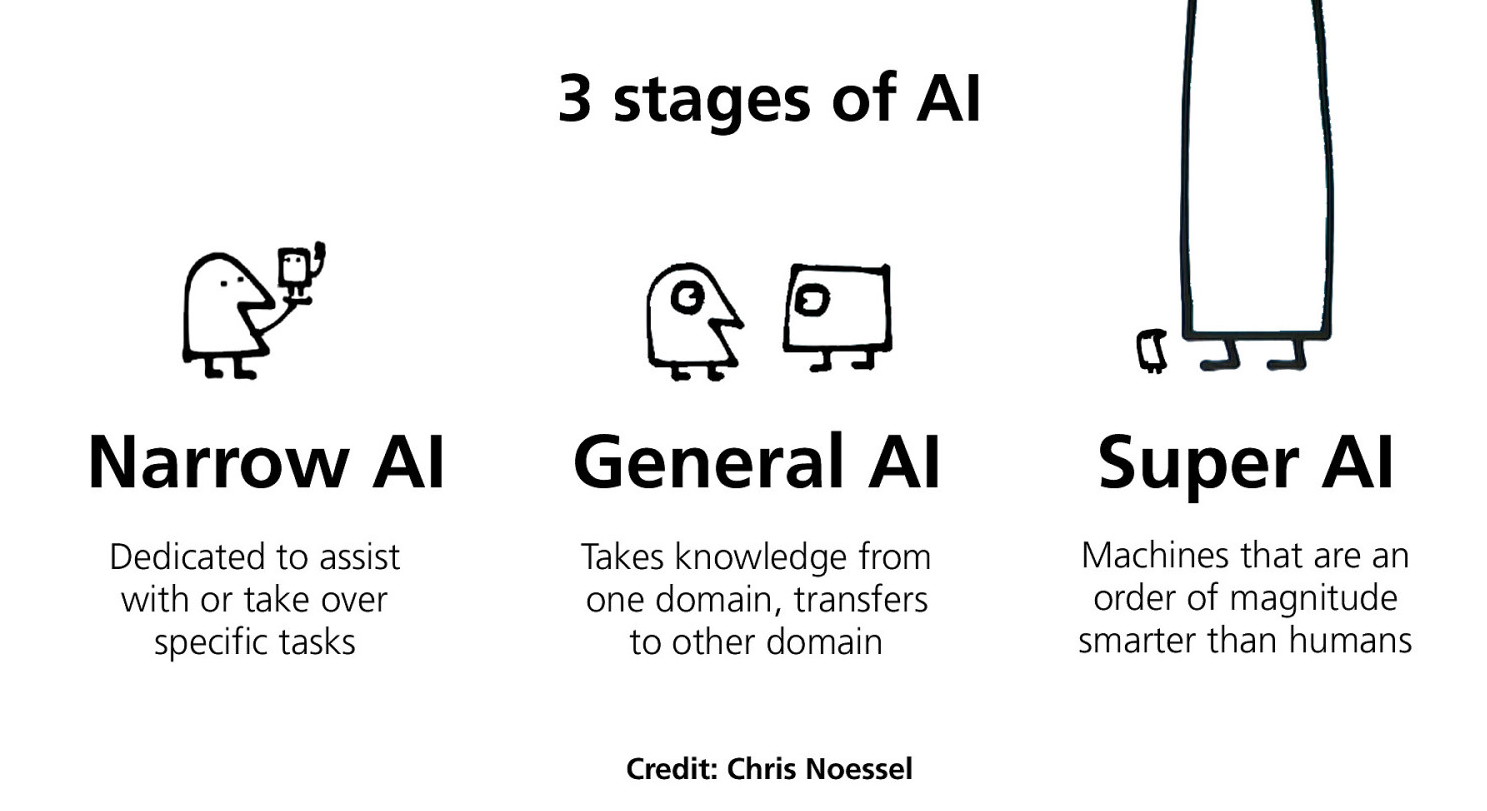
THE Encyclopedia Britannica defines Artificial Intelligence (AI) as follows: “it is the ability of a computer or computer-controlled robot to perform tasks commonly associated with intelligent beings.” It's important to note that completing these tasks doesn't tell us how smart the computer is. This does not necessarily mean that the computer is reasoning or knowing what it is doing. This is why we commonly distinguish AI into 3 sub-categories (3 main nuances):
- Narrow AI: Performs specific tasks. All artificial intelligences today are restricted
- General AI (generalist AI): is as efficient as a human in perception tasks and is able to reason
- Super AI: an AI as powerful as all humans combined
What does most AI consist of TODAY?
They consist of a combination of two things: abundant historical data and machine learning algorithms.
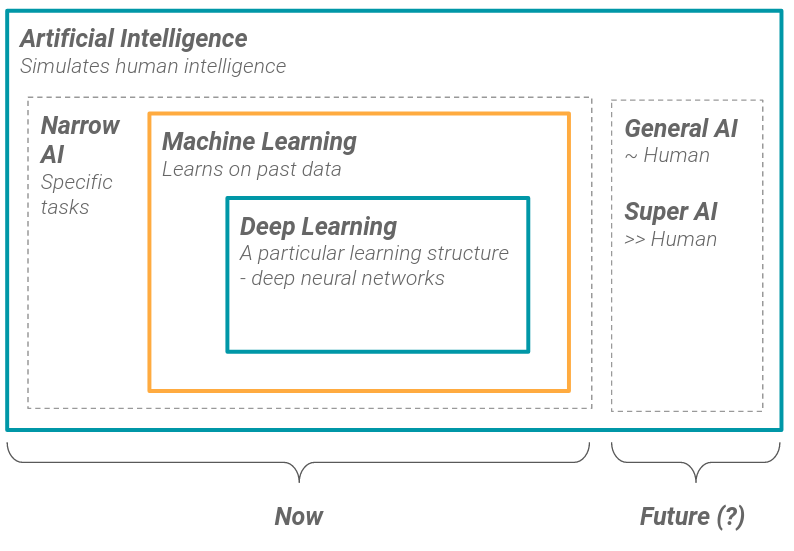
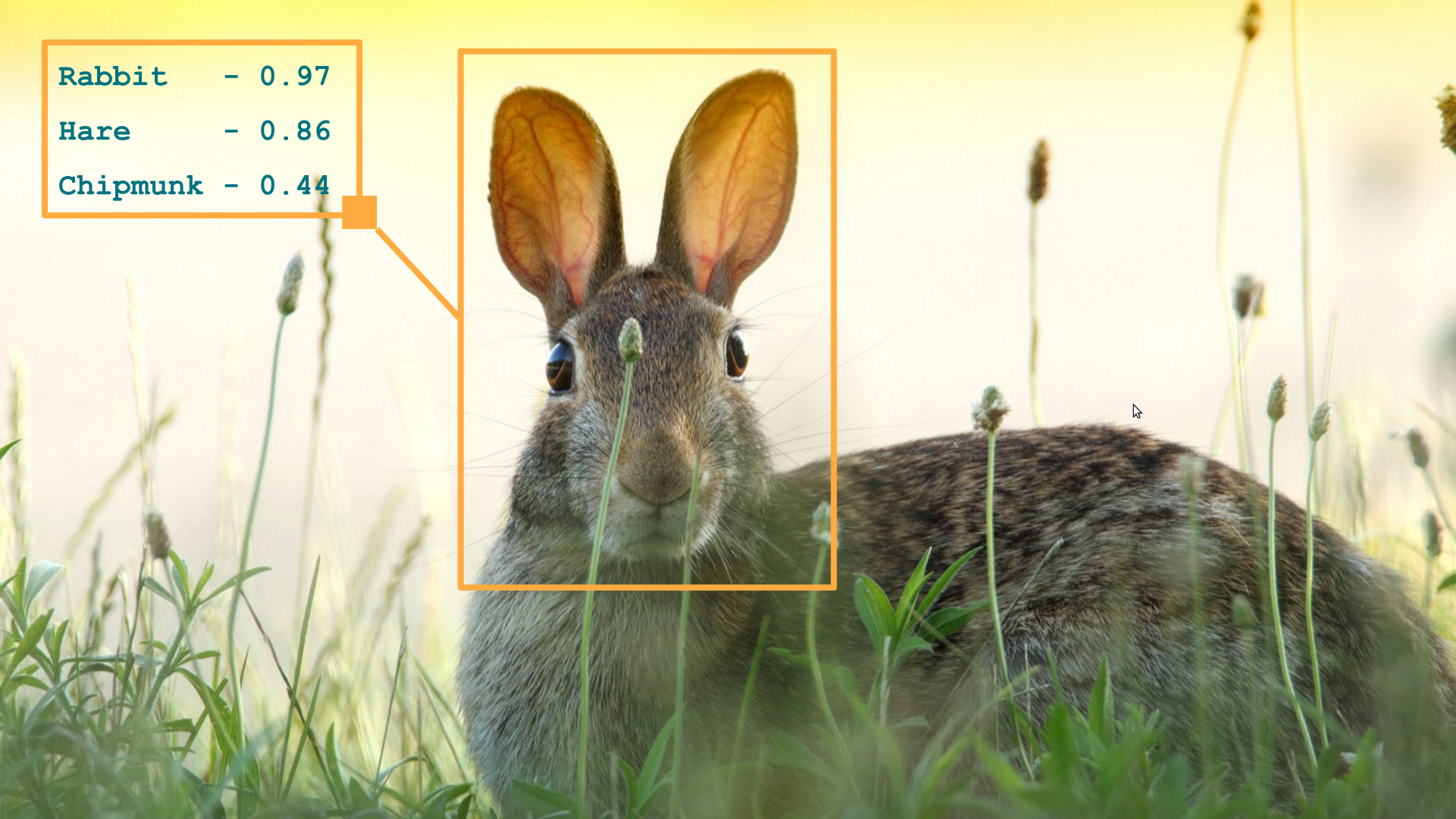
Machine learning, or machine learning, is the process by which a computer is able to perform a specific task without using explicit instructions. It achieves this result by relying on statistical models trained on historical data. For example, a machine learning model that aims to automatically detect an animal species will have learned from millions of animal photos that cats' ears are pointed. The model learns this information by taking the pixels in the image as input and finding that the pixel pattern corresponding to a cat's ear is a good way to distinguish cats from birds, dogs, and other species. Another set of characteristics will be taken into account by the model to distinguish cats from red pandas for example.There are many algorithms that are capable of detecting statistical patterns, they can be divided into two families:
- Shallow Learning (which can be translated as superficial learning): for example decision trees, linear regressions
- Deep learning (deep learning): deep neural networks with many hidden layers
For a semi-technical dive into superficial and deep learning, you can read these two dedicated blog posts:
- 8 Machine Learning Algorithms Explained in Human Language
- 3 Deep Learning Algorithms Explained in Human Language
What is AI not?
To set the record straight, here are a few things that AI is not:
- A human brain by proxy. Neural networks are much simpler than the human brain
- A human-looking robot capable of reasoning
- An “I know everything” computer that can answer any question
- A program that can predict the future with 100% accuracy.
CONCLUSION
To summarize, today's AIs perform specific tasks, they are called restricted AIs. This can already prove to be extremely useful for a wide range of industries and businesses. Restricted AIs are primarily based on deep learning, which is a subfield of machine learning. AIs can be combined together to create complex systems such as human-like robots. Such a robot can be equipped with the following models:
- A walking model (reinforcement learning)
- A model for detecting objects and people (deep learning)
- A face recognition model (deep learning)
- A reading model (deep learning)
- A game model (Reinforcement learning)
Instead of general-purpose AI, it's a combination of restricted AIs that make up the capabilities of robots.Available data and computing resources are the key factors of the expansion of AI applications around the world. There are two major challenges for AI today:
- The short-term challenge is to democratizing AI and to deploy it at scale to help businesses and organizations take advantage of this incredible technology
- The long-term challenge is to develop a generalist AI able to reason by combining mathematical research in the fields of deep learning, graph theory, and symbolic AI.
Continue reading


Simplify identity verification
A new way to manage identity verification that's easier and more secure.