
Facial recognition and identity verification: How does it work?
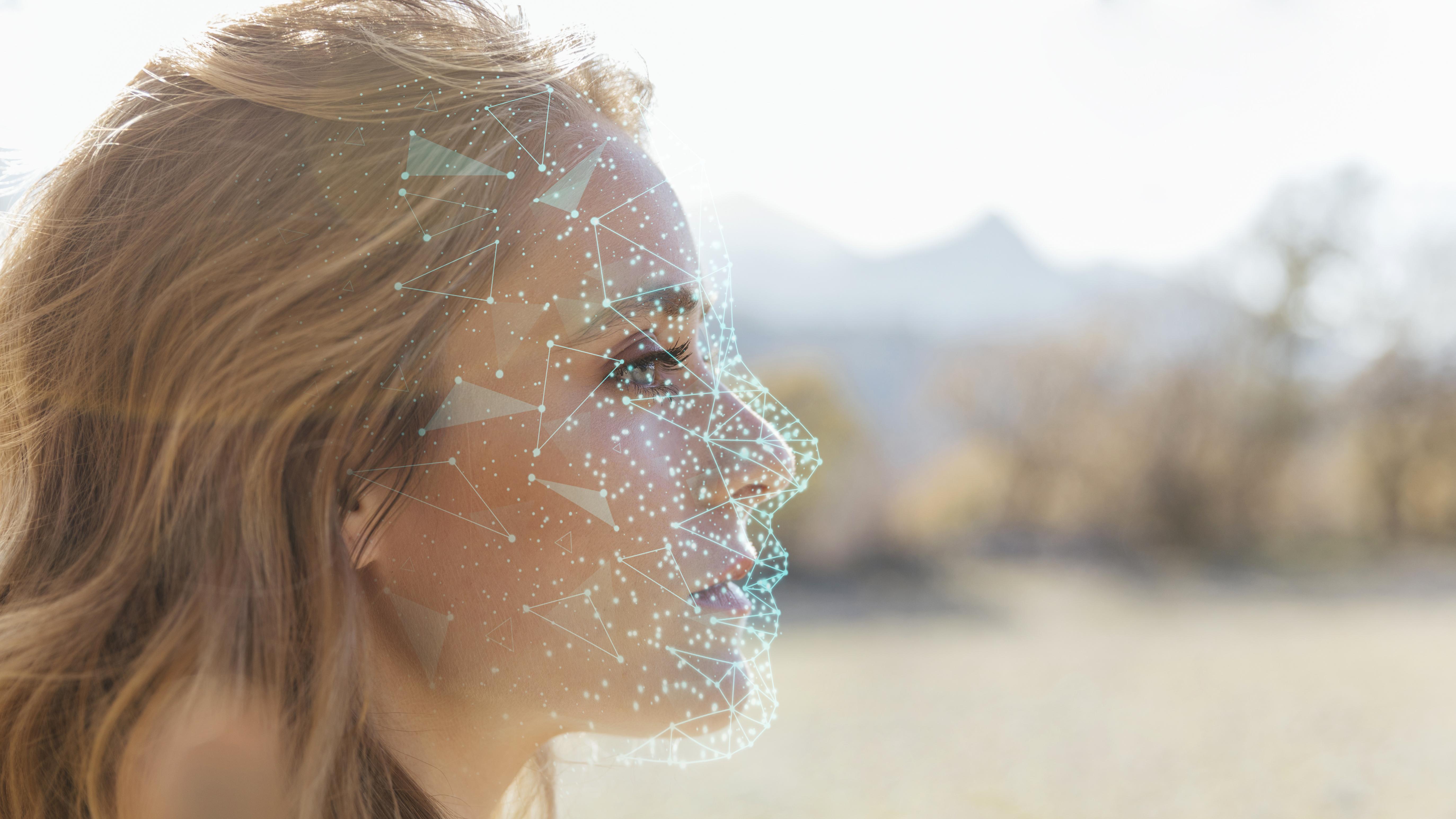
La facial recognition And the identity verification are technologies that are increasingly omnipresent in our daily lives. These tools make it possible to recognize and verify the identity of individuals. To do this, they rely on their unique facial features. Let's dive into the world of identity verification in the age of facial recognition together.
How does facial recognition work
Facial recognition is based on a set of sophisticated technologies. These allow capture, parse and pinpoint the unique facial characteristics of an individual. To understand how it works, it is essential to know the basics of this technology, which we will discuss now.
Fundamental concepts of facial recognition
Facial recognition uses concepts of computer vision And of image processing for face detection. Thus, it is possible to identify a face in an image or video. This technology is based on the ability of tools to recognize the patterns and structures of human facial features. For example: eyes, nose, mouth, and facial contours.
Operating principles
The functioning of facial recognition involves several key steps. First, the system should detecting the presence of a face using algorithms from Face detection. Then, it analyzes the facial characteristics of the detected face, such as the shape of the eyes and the distance between them. So, he can build a numerical representation called”Faceprint“. Finally, it compares this faceprint with another one, stored in memory, to identify the corresponding person.
Face recognition, authentication and identity verification
It is important to distinguish between the facial recognition, Authentication And the identity verification.
- Facial recognition involves identifying a specific face in an image or video. It is, in a way, the how of authentication and identity verification.
- Authentication checks if the identified face corresponds to that of an already known person, present in a database, in order to Allow access to your account. Authentication can use facial recognition, as with Face ID to unlock your iPhone.
- Identity verification wants to make sure that a virtual user is there natural person who he pretends to be. The objective here is to provide them with an online service while limiting the risks of fraud.
These distinctions are critical to understanding the role of facial recognition in identity verification.
The facial recognition process
The facial recognition process is a complex sequence of steps that allow capture, ofparse And ofpinpoint the facial characteristics of an individual.
Detailed steps: from capture to verification
Capturing the facial image
The first step is to capture an image or video containing the face of the individual to be authenticated. This capture can be done using surveillance cameras, security cameras, webcams, or even smartphones.
Human face detection
Once the facial image is captured, the facial recognition system uses algorithms of Face detection to locate and extract the facial region from the image. This step is crucial for insulate the face of the background and other elements of the image.

It is at this stage that a box is placed all around the faces detected.
Extraction of biometric data
After detecting the person's face, the system analyzes their facial features (mouth, eyes, gap, etc.). These are extracted from the image and converted into digital data that uniquely represents the face.
Creation of the “Faceprint”
One masque is then constructed from the characteristics of the face, it is the Faceprint.

From the extracted facial features, the system creates a “faceprint.” One digital facial print that uniquely represents The identity of the individual. This “faceprint” can be used in a computer way.
- In the case of biometric authentication, the face mask is compared to those recorded in the databases. If the user is identified, then they can access their account or unlock their device.
- For identity verification, The faceprint is compared to an official document with a passport photo. If these two elements match, the user's digital identity is validated.
Facial recognition algorithms
Face detection algorithms
The algorithms of Face detection are designed to locate and extract faces in an image or video. They use a variety of techniques. Among the most important: the edge detection, the image segmentation And the Deep learning And the Machine learning (machine learning processes). These algorithms are essential for isolating the face from the background and other elements of the image. They thus facilitate the subsequent analysis of facial characteristics. The tools ofartificial intelligence And ofdeep learning provide a high reliability of the processes of photo recognition and a reduction in error rate.
Algorithms for analyzing facial characteristics
Once the face is detected, facial recognition algorithms analyze facial characteristics. They use a combination of image analysis and feature extraction techniques. For example:
- The discrete cosine transform (DCT), which makes it possible in particular to extract local regions of the face.
- The Fourier transform, useful for the visual recognition of facial shapes.
- Convolutional neural networks (CNN), to analyze each pixel in its environment (image below).

These facial analysis techniques make it possible to extract accurate information on facial features.
Why does identity verification need facial recognition?
Identity verification is an essential part of many processes. Whether it's accessing online services, crossing borders, or completing financial transactions. Facial recognition offers several major advantages in this field. It reinforces the security, the precision And theefficiency identification processes for fight effectively against fraud.
Benefits of facial recognition in identity verification
Increased reliability
Facial recognition technology offers a increased reliability in identity verification. It is based on unique biological characteristics, specific to each individual. Facial recognition thus allows optimal security. It provides robust control and complex to falsify.
Speed and efficiency
Facial recognition allows for quick and effective identity verification. This allows reduce wait times and friction in the identification process. Thanks to sophisticated algorithms and advanced image processing technologies, facial recognition can identify individuals in just a few seconds. Enough to facilitate registration and online transactions.
Ease of use
Facial recognition is an identification method easy to use. It does not require specialized equipment or special technical knowledge. Users can simply show up in front of a camera to be identified.
Application versatility
Facial recognition algorithms can be used in a variety of contexts and industries. Of online banking To the border security going through the access control to buildings. Their versatility make it an ideal solution to meet diverse identification and identity verification needs.
Improved accuracy
Thanks to technological advances in the field of artificial intelligence and machine learning, facial recognition offers high precision. Facial recognition algorithms are capable of Recognize faces With a precision impressive. Even in varying light conditions or with different viewing angles.
The business impacts of facial recognition
Reducing the risk of fraud
By offering identification that is more robust and difficult to falsify, facial recognition helps to reduce fraud risks And ofimpersonation. Businesses can thus improve their safeguarding against fraudulent activities, the Terrorist financing And the money laundering.
Strengthening security
Facial recognition enhances security by offering an identification method that is difficult to impersonate. The security of companies and individuals is thus strengthened in the face of identity theft and documentary forgery.
Increase in efficiency
By automating manual tasks, facial recognition identity verification systems reduce the risk of human error. Facial recognition systems can be integrated with existing applications and systems to simplify workflows and expedite transactions.
Increased customer satisfaction
Facial recognition makes it possible to optimize the processes ofentering into a relationship. The processing time of files is greatly reduced. This allows customers to take advantage of the company's services without having to wait or travel.
Facematch: Face recognition from a photo
Photo-based facial recognition is also known as”Facematch“(or facematching). It is an identity verification method that uses Photo of a face to identify the individual. This approach is based on the comparison of a selfie taken using a smartphone, with the photo on an identity document. Here is a detailed analysis of the facematch concept, methods to avoid photo-based fraud, and its advantages and limitations.
Explanation of the concept of facematch
Based on a photo portrait, facial recognition algorithms analyze the distinctive characteristics of the face. Les outlines, the proportions, and many other elements are identified. This allows this portrait to be compared to the photo on an ID document. Once these images are compared, the AI is able to give an index of confidence that the 2 images come from the same person.
Methods used to avoid photo fraud
To avoid photo-based fraud, facematch systems use various techniques of security And of vetting. Among these methods, we find Authenticity analysis from the photo. This may include detecting depth and Face relief to distinguish 2D images from real 3D faces.
Advantages of Facematch for facial recognition
Ease of use
Photo-based facial recognition is simple and practice to be set up. It only requires a photo ID and a selfie to verify a person's identity.
Rapidity
The results can be obtained swiftly (or even instantly), allowing reduce friction with the user.
Versatility
This method can be used in a variety of contexts. This extends from mobile applications aux atms by going through the security systems.
Limits of facial recognition via Facematch
Vulnerability to fraud
Passport photos can be forged or obtained without consent. This makes the facematch vulnerable to certain fraud and to some fraudsters, who succeed in deceiving the system.
Reduced accuracy
Photo-based facial recognition may be less accurate than other methods. Especially if the photos are of poor quality or if the faces have angles or different expressions.
Dependence on image quality
La image quality used is essential for the reliability of the facematch. This can influence facial recognition results. Performance may vary depending on thelighting, of the solving and others environmental factors.
Liveness: Proof of Life Video
The Liveness, in the context of facial recognition, refers to the ability to detect whether a face is actually present and In motion. This feature is essential for increasing the security and reliability of facial recognition systems. Liveness ensures that identification is done with a Living person.
Definition of liveness check in the context of facial recognition
The liveness attests to the vivacity of a person using a video. Instead of a simple static image, the user is asked to film certain movements to confirm their identity. It is also called the Proof of life Or the Detection of living beings. This technology allows the verification of biometric signals such as blinking, head movements, facial expressions, etc.In general, a frame of the video is also retrieved to perform a facematch check. So liveness adds a layer of security to identity verification.
Detecting proof of life from a video
To detect the Proof of life based on a video, the systems of facial recognition use different methods and technologies. Among these, we find the analysis of eye movements. The blinking And the pupil movements Here are indicators of alertness. In addition, the detection of head movements, of facial expressions And posture changes can be used for Detecting the living.
Importance of liveness in online identity verification
Liveness is of crucial importance in online identity verification. This increases the security and reliability of identification processes. It makes it possible to ensure that the face subjected to facial recognition is not a simple physical representation. Liveness thus makes it possible to prevent fraud based on pre-recorded photos or videos. It also ensures that users are genuinely present and engaged in the identification process. In this way, online transactions and digital interactions are secure.Ultimately, the liveness check helps to ensure accurate, reliable and secure identity verifications.
To go further: Facial recognition is not enough
While facial recognition is a powerful technology for identity verification, it alone is not enough to ensure total security. against fraud. To effectively combat fraudulent activities, it is essential to set up a verifying information And a document authentication.
Verifying the information
La verifying information involves comparing personal data provided by the user. Among these, we note the name, the first name, the date of birth, the address, but not only that. You can also find the salary status, the amount of the salary, the political exposure,... This step makes it possible to ensure that the information provided is Valid and Coherent by cross-referencing information between them. In this way, the risks ofimpersonation Or of document fraud are minimized. Robust verification processes, such as comparing the information provided with external sources reliable, can contribute to strengthening the safety. Discover our article dedicated to fight against document fraud.
Authentication of documents
THEdocument authentication consists in checking theAuthenticity of identity documents and documents provided by the user (passports, identity cards and driver's licenses). This step ensures that the documents submitted are legitimate and not falsified. In this way, we can reduce the risks of tampering And ofimpersonation.Advanced authentication techniques can be used to ensure the legitimacy and validity of documents. Among these, we find the Hologram verification, signatures, and document security features. Several articles concerning documentary authentication are available on our site. Learn more about identity card check points. You can also find our article onIdentifying a fake passport.
Continue reading


Simplify identity verification
A new way to manage identity verification that's easier and more secure.