
Why does my insurance require my identity card?
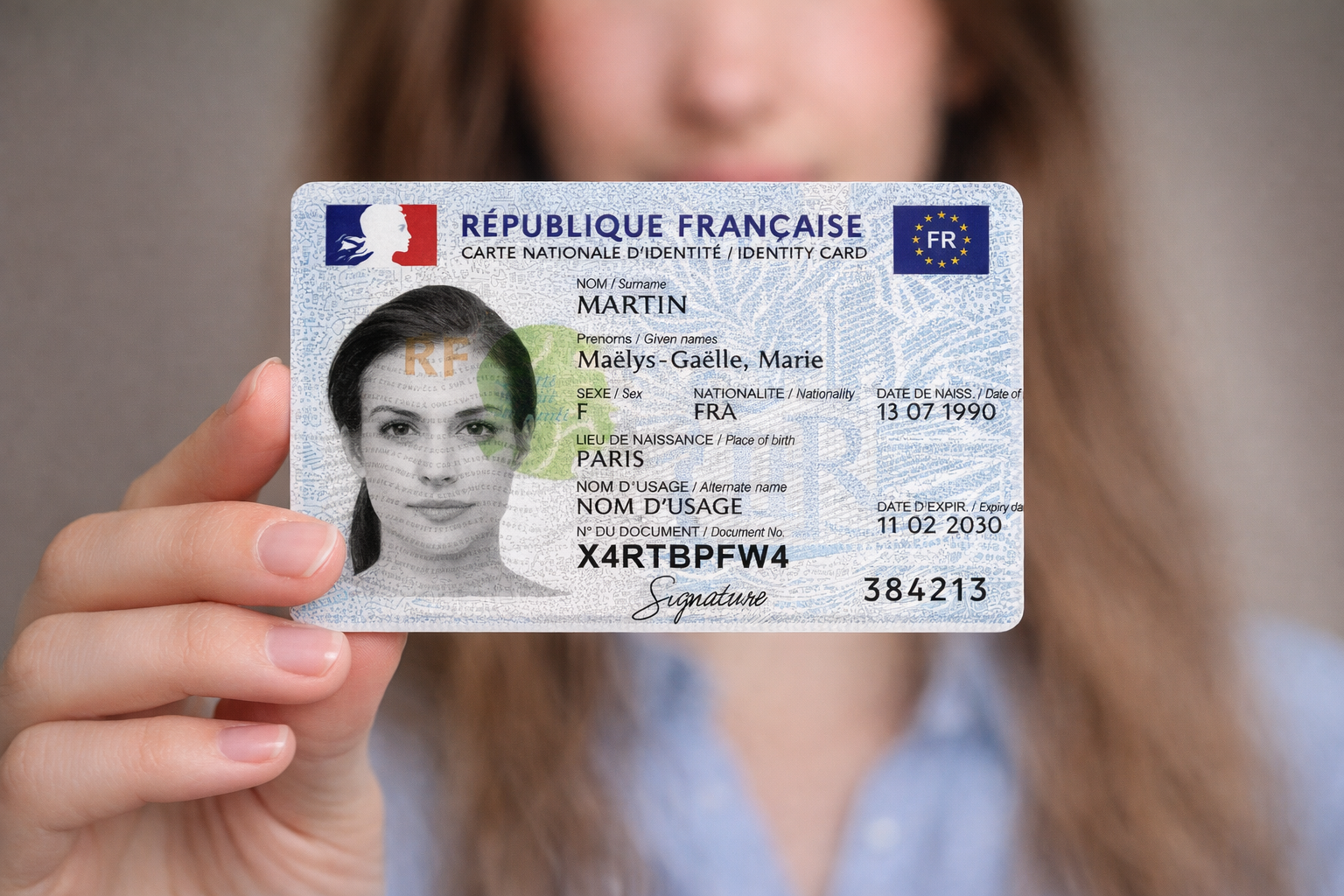
You have just received a letter or an email from your insurance company asking for a copy of your identity card. First reaction: distrust. Is it a scam? An abusive request? A phishing attempt? Don't worry: in the vast majority of cases, this request is perfectly legitimate and even mandatory. Your insurance company has no choice. French and European regulations require him to verify the identity of each customer, whether when signing a contract or throughout the duration of the relationship. In this article, we will dissect the reasons for this obligation, the legal texts that govern it, the legal texts that govern it, the documents accepted, and above all how to protect yourself from scams while responding correctly to this request.
Key points to remember
Before we get into the details, here's what you absolutely need to know about applying for an ID:
- Your insurer did not “choose” to ask for your identity card : it is legally obliged to do so by the Monetary and Financial Code, in the context of the fight against money laundering and the financing of terrorism (LCB-FT). This obligation has existed since the 2000s and was significantly strengthened in 2016 and 2020.
- Without a valid ID, the insurer can block your transactions : refusal to subscribe, impossibility of making a purchase on your life insurance, suspension of compensation after a claim, or even termination of the contract in some cases.
- This check also protects you : it limits the risks of identity theft, fraud and embezzlement of your benefits by a malicious third party.
- Beware of scams : your receipt must always be sent via secure channels (personal space on the insurer's website, mobile application, postal mail). Never reply to a suspicious email without verifying its authenticity.
- Even long-time customers are affected : regulations require data to be updated regularly, which is why you may receive this request after 10 or 15 years of loyalty.
Why does my insurance require a copy of my identity card in 2025 or 2026?
This question always comes up during a new subscription, a life insurance purchase, a major compensation claim or even a simple contract modification.
Insurers are subject to the same rules as banks
Contrary to what one might think, insurance companies are not simple commercial providers. They are assimilated to financial institutions and must comply with the same compliance obligations as banks. This situation arises from European anti-money laundering directives (3rd, 4th, 5th and 6th directives), transposed into French law, in particular by ordinance no. 2016-1635. These texts require all financial players — banks, insurers, mutual insurance companies — to implement strict customer knowledge procedures.
Verify that you are the owner of the contract
A national identity card or any other official document allows the insurer to confirm that the person who signs a contract, requests a purchase or claims compensation is who they say they are.Imagine the following case: a scammer pretends to be you and asks for the total repurchase of your life insurance contract. Without thorough identity verification, the money could end up in a fraudulent account. Requesting a copy of your document is therefore a direct protection of your interests.
Protection against identity theft
Cases of fraud and identity theft are multiplying with the digitalization of services. Contracts can be taken out in your name without you knowing it, fictitious claims declared to receive benefits. By requiring proof of identity at each key stage, the insurer considerably limits these risks. It is also for this reason that the request can occur even if you have been a customer for many years.
The legal framework: what are the obligations of your insurer?
Requesting an ID is not a commercial “zeal” or an administrative fad. It is a compliance obligation controlled by the ACPR (Autorité de Contrôle Prudentiel et de Résolution), attached to the Banque de France.
The “Know Your Customer” (KYC) principle
Insurers must apply the principle of customer knowledge, better known by its English acronym KYC. This means they need to:
- Formally identify each customer before entering into a relationship
- Verify the authenticity of the documents provided
- Ensure consistency between the declared information and the real situation
- Exercise constant vigilance throughout the relationship
For savings products such as life insurance, this vigilance also extends to the origin of the capital paid.
Reference texts
Several texts frame this obligation:TextMain ContentMonetary and Financial Code (art. L.561-1 et seq.) General obligations in the fight against money laundering and the financing of terrorismInsurance codeSpecific due diligence obligations for insurersOrdinance No. 2016-1635Strengthening of controls LCB-FT5th European Directive (2018) Harmonization of rules at European level
Checks at the entrance and throughout the relationship
The insurer must verify your identity:
- At the time of subscription : this is the first mandatory filter
- During the contract : during significant transactions (large payments, redemptions, claims) or during periodic update campaigns
- At the fence : to ensure that the final beneficiary is the right person
Heavy penalties in case of non-compliance
If an insurer does not meet these obligations, it is exposed to:
- Administrative sanctions imposed by the ACPR
- Fines of up to several million euros
- Criminal sanctions for managers
- A withdrawal of approval in the most serious cases
This regulatory pressure explains why companies are particularly demanding on the provision of complete and up-to-date documents.
What questions and information can your insurance company ask you?
The identity card is only part of the customer knowledge system. Depending on the type of contract and your profile, the insurer may ask you other questions to assess your overall situation.
Examples of frequently asked questions
Here is the information that your insurance company is likely to ask you:
- Professional situation : CDI, CDD, self-employed, retired, unemployed
- Income Level : in installments or approximate amount
- Heritage situation : available savings, real estate, other investments
- Family composition : marital status, number of dependent children
- Tax residence : France or abroad, country concerned
The origin of life insurance funds
For savings and life insurance contracts, the questions can go further. The insurer must understand where the capital you want to invest comes from:
- Wages accumulated over the years
- Selling a property
- Inheritance recently received
- Family donation
- Capital gains on other investments
The purpose of this requirement is not to judge you, but to detect possible inconsistencies that could signal a money laundering operation.
Questions about your projects
The insurer may also ask you about the intended use of the amounts:
- Preparing for retirement
- Financing a real estate project
- Transmission to children or grandchildren
- Building precautionary savings
This information also allows you to better advise you on the choice of guarantees, ceilings and investment vehicles adapted to your real needs.
What proof of identity and status may be required?
Now let's move on to practice: what documents do you need to provide exactly?
Golden rule: validity and legibility
All credentials must be:
- Officials : issued by a recognized public authority
- Readable : clean copy, not truncated, with all elements visible
- Valid : a CNI expired in June 2024 will no longer be accepted in October 2025
Commonly accepted forms of identification
Your insurance company will generally accept one of the following documents:
- French national identity card (old or new format)
- Identity card from another country in the European Union
- French or foreign passport
- Residence card or residence permit for non-European nationals
- Driver's license in the new biometric format (depending on the company)
- Military ID card in some special cases
Other supporting documents depending on the situation
In addition to the identity document, other documents may be requested:
- Proof of residence less than 3 months old (electricity bill, rent receipt)
- RIB for benefit payments
- Tax notice
- Notarial act in the event of a major capital injection
- Pay slip or employer's certificate
- K-bis extract for businesses
Requests for complements
If your copy is unclear, incomplete, or if your marital status has changed, the insurer may ask you:
- A new, sharper photo
- The back of the card
- A room updated after marriage or name change
- An additional document in case of moving abroad
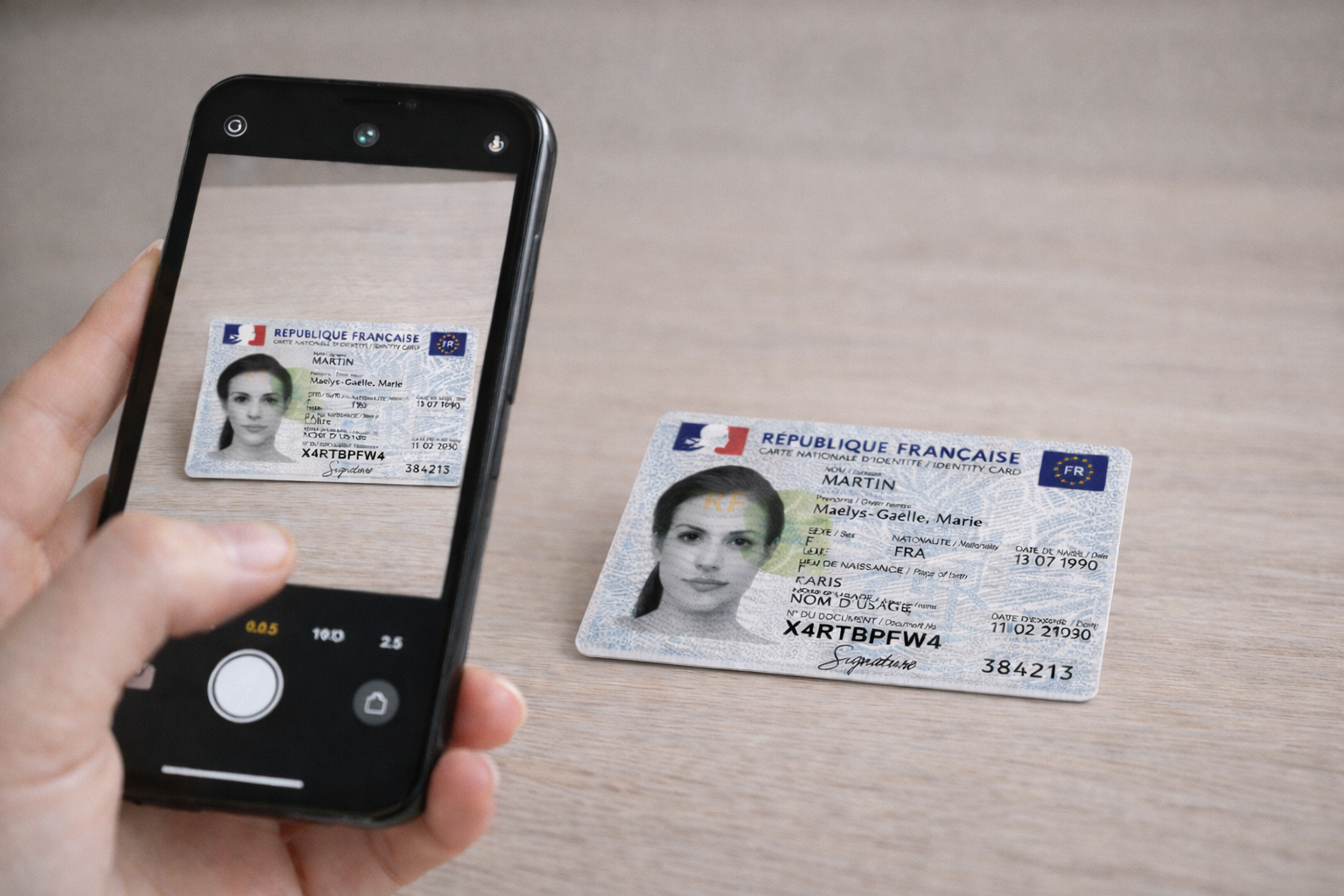
Before taking out your insurance contract
When a contract is first opened — car, home, health or life insurance — identity verification is systematic. The insurer will:
- Check the consistency between your identity document and the subscription form
- Verify your age (essential for young driver conditions, senior offers, access limits to certain products)
- Make sure you have the legal capacity to sign
Depending on the type of contract, additional documents may be required:Type of contract Additional documentsPossible additional documentsCar license, information statementHousing lease or property deedHealth/pensionMedical questionnaireLife insuranceProof of income and wealthWithout these supporting documents, the insurer may simply refuse to enter into a relationship with you.
During the life of your contract: regular updates
The request for an identity card is not limited to the day of subscription. It can come back years later, which often comes as a surprise to policyholders.Examples of situations that trigger a request:
- Partial or total purchase of life insurance
- Significant compensation following a disaster
- Change of address or family situation
- Periodic internal control of the company
- New regulations requiring customer records to be updated
The insurer must keep several pieces of information about you up to date:
- Full marital status
- Residence address
- Professional situation
- Tax residence
- Politically Exposed Person (PEP) status if applicable
Practical advice : respond quickly to these requests to avoid any blockage on your transactions (payments, arbitrations, health reimbursements, claims compensation).
How to send your identity card to your insurance company safely?
In a context where online fraud, phishing and scams are on the rise, vigilance is required. Here's how to do it safely.
Prioritize the secure customer area
The safest method is to use your personal space on the insurer's website or mobile application:
- Log in with your usual identifiers
- Use strong authentication if it is offered (SMS code, authentication application)
- Upload your document in JPG or PDF format
- Keep a confirmation of the shipment
Always check the site address
Before you send anything:
- Verify that the URL starts with “https://”
- Check that the domain name is that of your insurance company (no suspicious variants like “assureur-fr.com” instead of “assureur.fr”)
- Never click on a link received in a suspicious email or SMS
Sending by email: avoid if possible
Sending by simple email is not recommended because the message can be intercepted. If this is the only option offered:
- Only use an official address from the insurer
- Never send the original of your card
- Avoid sending other sensitive documents in the same message
Mailing is still an option
Classic mail still works:
- Send a clear copy of your piece (never the original)
- Send the envelope to the company's customer service department or to your general agent
- Keep a copy of what you send
Verify that the request is genuine
Scammers are becoming more and more skilled. Here's how to avoid scams:Compare the received message with your usual contacts:
- Does the email address match that of your insurance company?
- Is the phone number on your contract?
- Are you familiar with the counsellor's name?
If in doubt, call directly:
- Use the number shown on your contract, your green card or the official website
- Never dial a number contained in a suspicious message
What the insurer will never ask you in the same message:
- Your confidential bank card code
- Your complete customer area identifiers
- An immediate transfer to an unknown account
If the message seems fraudulent to you:
- Delete it immediately
- Take a screenshot and send it to your insurer's fraud department
- Do not click on any links in the message

Can you refuse to provide your identity card to your insurance company?
Short answer: no, not if you want to continue to be covered or perform the requested operation.
A legal obligation for the insurer
The insurer does not have the right to execute a “sensitive” transaction if it has not been able to remove its doubts about the identity of the client or the origin of the funds. This prohibition applies to:
- At the opening of a new contract
- Major redemptions on life insurance
- With significant payments
- To post-disaster compensation
The consequences of a persistent refusal
If you refuse to provide your ID despite reminders, here is what may happen:SituationPossible consequenceNew subscriptionRefusal to enter into a relationshipLife insurance repurchase Blocking the operationAllowanceClaimImpossibility of paying the indemnitivenessImpossibility of paying the indemnityUpdate not carried outSuspension or termination of the contract
Suspicion statement to TRACFIN
In extreme cases where the answers remain insufficient or inconsistent, the insurer may have to file a suspicious report with TRACFIN (the French financial intelligence unit). This statement is made without notifying the customer concerned.
In case of disagreement
If you think the request is excessive or unjustified:
- Ask your insurer for written explanations
- Seek the advice of a lawyer specialized in insurance law
- Contact a consumer association
- Contact the insurance mediator as a last resort
Is your data protected when you send your ID card?
This question comes up often, and it's legitimate. Don't worry: there are several mechanisms that protect your personal information.
Professional secrecy and RGPD
Insurers are subject to two major obligations:
- Professional secrecy : provided for by the Insurance Code, it prohibits the disclosure of customer information
- The RGPD : the General Data Protection Regulation strictly regulates the collection, storage and use of personal data
Secure storage
Your identity documents are stored in secure computer systems:
- Access limited to authorized persons only (compliance department, contract management, internal control)
- Encrypting sensitive data
- Logging of consultations to detect any abnormal access
Supervised shelf life
The LCB-FT regulations require that supporting documents be kept for several years after the end of the business relationship. Then, the documents are archived and then destroyed in a secure manner.
Your rights to your data
As an insured person, you have several rights:
- Right of access : get a copy of the data about you
- Right to rectification : correct inaccurate information
- Right of limitation : restrict the use of your data in certain cases
- Right to erasure : under certain conditions, request the deletion of your data
To exercise these rights, contact your company's Data Protection Officer (DPO), whose contact details generally appear on the website or in the terms and conditions.
Penalties in case of violation
The disclosure of confidential information by a professional is punishable under criminal law (article 226-13 of the Criminal Code on professional secrecy). This threat strongly encourages companies to strengthen their security systems.
Frequently asked questions (FAQ)
My insurer asks me for an identity card even though I have been a customer for more than 10 years, is that normal?
Yes, it is perfectly normal. The strengthened regulations after 2016 require insurers to regularly update the files of all their customers, including the oldest ones. Your initial document may be out of date, the computer system may have evolved, or a compliance campaign may be in progress. This request simply testifies to compliance with legal obligations by your insurer.
What should I do if my ID card is expired or in the process of being renewed?
Inform your insurance provider of the situation immediately. You can temporarily send another valid document (passport, biometric driver's license). If you do not have any valid documents, send the renewal request receipt issued by the town hall or the prefecture. As soon as you receive your new card, send a copy of it to regularize your file.
My minor child is insured, do I also need to provide an ID for him?
Yes, in most cases. For a contract in the name of a minor (health insurance, school insurance, or even life insurance with the child as insured), the insurer may request the identity document of the minor and that of the legal representative (s). A family record book may also be required to establish the parentage relationship.
Can I hide some of the information on the copy of my ID card?
It is strongly recommended not to hide the elements necessary for identification: name, first names, date and place of birth, validity date, document number. If this information is illegible or hidden, your piece will likely be refused. On the other hand, some companies tolerate the masking of non-essential elements such as the MRZ zone (automatic reading zone) on passports, but check with your insurance company beforehand.
How long does it take for the insurer to validate my ID?
In practice, validation generally takes a few working days. However, the delay may be extended during periods of high activity (school year, end of year), if the copy is difficult to read, or if additional information is required. For a major transaction (repurchase, claim), anticipate this process by at least two weeks in order to avoid any difficulty or delay.
In summary, the request for an identity card by your insurer is not an intrusion into your privacy, but a legal obligation that protects you as much as it protects the insurer. By responding quickly via secure channels, you facilitate the management of your file and protect yourself against fraud. If you have any doubts about the authenticity of a request, do not hesitate to contact your advisor directly via the official contact details of your contract. It's better to take a few minutes to verify than to risk identity theft.
Continue reading



Simplify identity verification
A new way to manage identity verification that's easier and more secure.